The story behind Prisma Science
Prisma Science didn't start as a company. It started as a conviction — that the tools of science should belong to everyone who wants to do science, not only to the labs that can afford a five-figure invoice. For more than ten years that conviction has guided my work across three continents, and Prisma Science is where it finally takes the form of a business: building, certifying, and delivering open scientific hardware to the researchers, educators, and clinicians of Latin America.
I'm Andre Maia Chagas, and this is how Prisma got here.
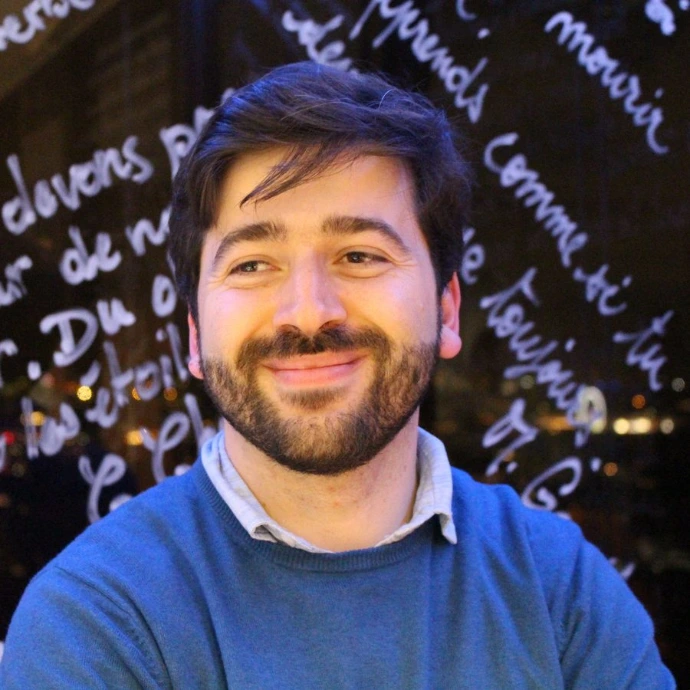
From São Paulo to the lab bench
My path began with a B.Sc. in Biology at the University of São Paulo, completed in 2008. I was drawn to the nervous system — how it encodes the world, how circuits give rise to behaviour — and that pull took me to Germany, to the University of Tübingen, one of the great centres of European neuroscience.
There I earned an M.Sc. in Cellular and Molecular Neurosciences in 2012, and went on to a Ph.D. in Neural and Behavioural Sciences, completed in 2020. My research spanned the visual system and behaviour: studying how the retina processes information, building visual stimulators for vision research, and working with model organisms from zebrafish to Drosophila. Along the way my work appeared in journals including PLOS Biology, eLife, Neuron, and Scientific Reports.
But the most important thing I learned in Tübingen wasn't in a single experiment. It was a problem I kept running into: Lack of equipment access.
The €100 lab and the case for open hardware
Modern neuroscience runs on instruments — microscopes, behavioural arenas, stimulators, controllers — and the commercial versions cost a fortune. I watched talented colleagues, especially those in less-funded institutions, locked out of entire fields of research simply because they couldn't buy their way in.
So we started building our own, and sharing the designs freely.
In 2015 I co-authored Open Labware: 3-D Printing Your Own Lab Equipment in PLOS Biology — a piece that helped put open scientific hardware on the map. In 2017 came The €100 Lab, describing FlyPi: a 3D-printable, Raspberry Pi-based platform for fluorescence microscopy, optogenetics, and behavioural experiments that could be built for under a hundred euros, instead of the thousands its commercial equivalents demanded. In 2018 I made the broader argument directly, in Haves and Have Nots Must Find a Better Way: The Case for Open Scientific Hardware.
The idea is simple. When you publish a tool's full design — its hardware, its instructions, its code — anyone, anywhere can build it, repair it, improve it, and adapt it to their own questions. That means lower costs, distributed manufacturing, genuine reproducibility, and access for communities that were never on the customer list. It is the open-source software philosophy, applied to physical instruments.


Training the world to build
Projetos numa tela não mudam nada até que as pessoas consigam fazê-los. Boa parte do meu trabalho na última década foi ensinar esse ofício.
Designs on a screen don't change anything until people can make them. Much of my work over the past decade has been teaching that craft.Since 2014 I've volunteered with TReND in Africa, a scientist-run charity supporting research and education across the continent. Through it I've organised and taught open-source hardware workshops — 3D printing, electronics, programming, fast prototyping — for academics at every career stage, mostly across Africa. Alumni of those courses have gone on to publish tools of their own, including the establishment of a state-of-the-art biomedical research centre in Northeast Nigeria. When the COVID-19 pandemic hit, the same community-driven, locally-produced approach was turned to making face shields and protective equipment where supply chains had failed.
I also founded Open Neuroscience, a community-curated repository of open-source projects for the field, and have worked with organisations including Mozilla, Wikimedia Germany, and the open hardware community as a fellow, coordinator, and advocate.
In 2019 I joined the University of Sussex as a Scientific Officer in Bioengineering, developing and maintaining open-source equipment for research labs. In 2023 I became an Assistant Professor (Lecturer) in Open Science at Sussex Neuroscience — and in 2025 I was honoured to win the Open Research category at the Sussex Awards for this body of work.
Why Prisma Science
DAfter ten years of designing instruments, teaching others to build them, and arguing that science has an access problem, one gap remained. A brilliant open design on a repository is still just files. Someone has to build it well, calibrate it, certify it, and stand behind it — especially for the clinics and labs that need a finished, trustworthy instrument rather than a weekend project.
That is what Prisma Science is for.
We take the best open-source hardware from the global scientific community, build and certify it to professional standards, and make it available to the labs across Latin America that need it most. We bring designs through ANVISA registration and ISO quality standards where clinical use demands it. And — because the open ethos is the whole point — we work closely with the original developers, making sure their work is recognised and rewarded when we sell what they designed.
It's the same conviction I started with, now with a calibration certificate attached. Open. Certified. Yours.

Want to talk about equipping your lab, replicating a published tool, or building something custom? Get in touch — it's the part of the work I enjoy most.